Artificial intelligence for multi-scale battery modeling
The BATMAN project aims to achieve several major advances in understanding and optimizing electrodes for next‑generation batteries by combining advanced modeling with innovative machine‑learning approaches. These efforts help accelerate the development of energy storage systems that are more efficient, more durable, and better suited to the growing needs of electrification.
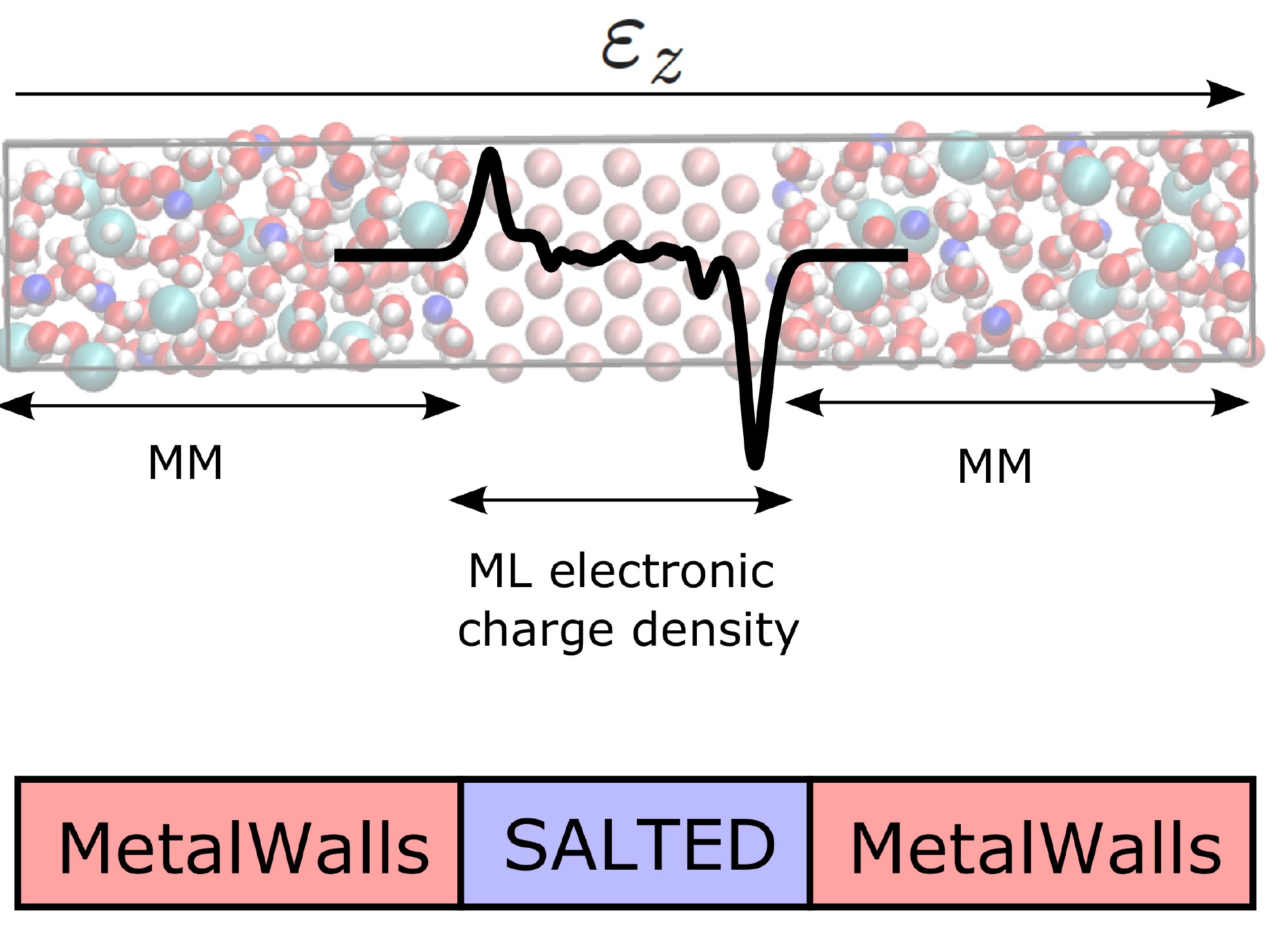
A first research focus was on the impact of mechanical properties of power battery electrodes on their electrochemical performance. Results show that mechanical flexibility plays a key role in enabling significantly faster charge rates. The flexible electrodes studied exhibited charge kinetics up to twice as fast as those of rigid electrodes, opening new perspectives for designing batteries with rapid charging and high power.1
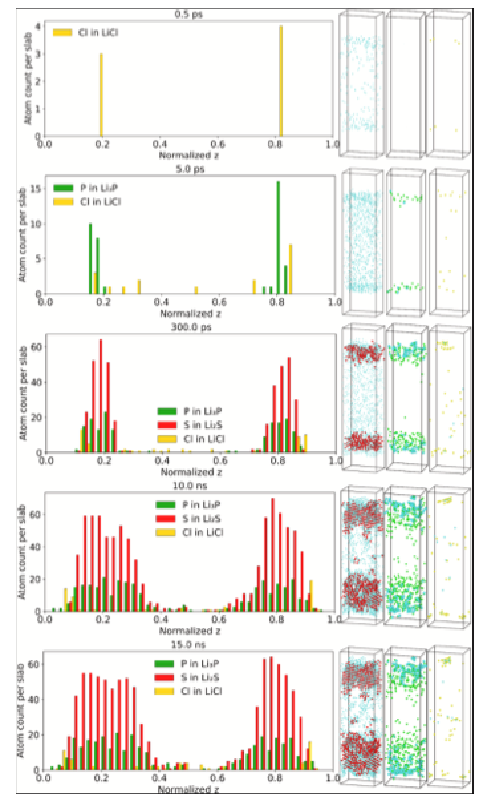
The project also made significant progress in understanding the solid‑electrolyte interphase (SEI) — a crucial interfacial layer for battery stability and longevity. A machine‑learning‑based model was developed to simulate the formation of this interphase at the interface between a solid electrolyte (Li₆PS₅Cl) and a lithium metal electrode. Simulations revealed a two‑step formation mechanism, combining a rapid chemical reaction that creates an amorphous phase with a gradual crystallization into a structured solid solution. Additionally, machine‑learning analysis tools tracked the time‑dependent evolution of degradation products, providing deeper insight into the interfacial processes involved.2
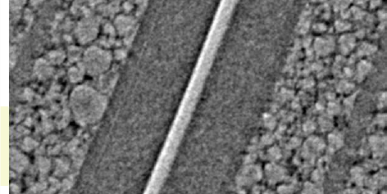
Furthermore, innovative numerical models were developed to better represent industrial electrode manufacturing processes. A first deep‑learning model predicts microstructure after calendaring by incorporating key parameters such as porosity, tortuosity, and mechanical swelling — while greatly reducing computational cost. A second hybrid model, combining physical simulations with statistical learning, was designed to simulate drying steps with improved efficiency and robustness, even when formulations change.3
Finally, to address the challenges posed by new battery generations — particularly limited available data — transfer learning approaches were successfully implemented. This demonstrated the potential for quickly adapting existing models to new electrode materials, thus accelerating innovation and enabling faster transfer to industry.4
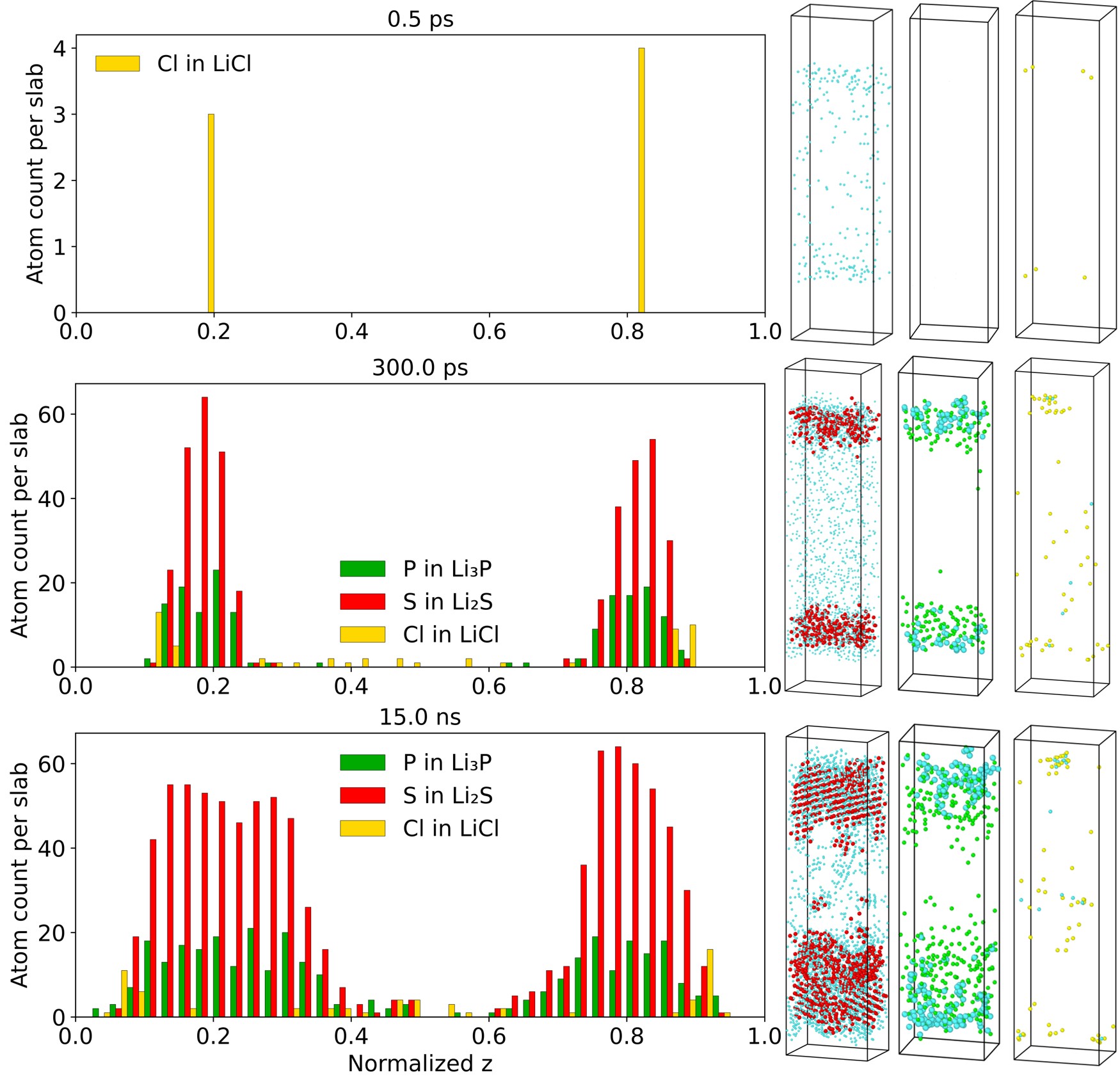
Figure 1: Time evolution of the crystalline composition of the interphase formed between lithium metal and a solid electrolyte
- Waysenson, France-Lanord, Serva, Simon, Salanne et Saitta, ACS Nano, 19, 29462 (2025 ↩︎
- Warnicka, Chaney, Salanne et van Roekeghem, Mater. Today Energy, 56, 102215 (2026) ↩︎
- Galvez-Aranda, Le Dinh, Vijay, Zanotto et Franco, Adv. Energy Mater., 14, 2400376 (2024) ↩︎
- Fernandez, Saravanan, Lou Omongos, Troncoso, Galvez-Aranda et Franco, NPJ Adv. Manuf., 2, 14 (2025) ↩︎
Autres Highlights