Bioresorbable batteries
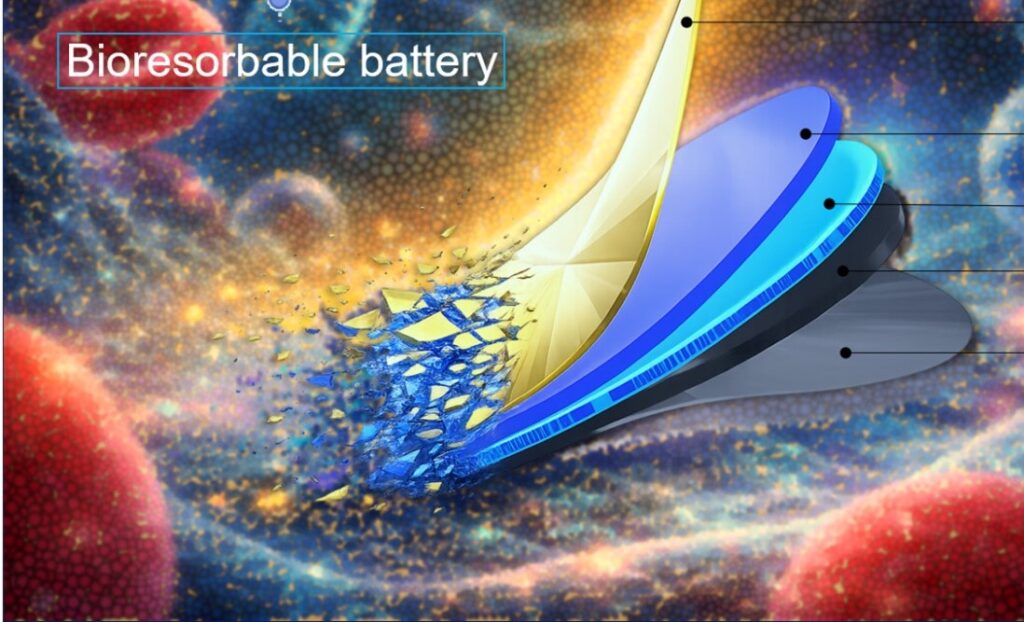
The SIMBA project aims to develop flexible bioresorbable batteries for temporary medical applications.
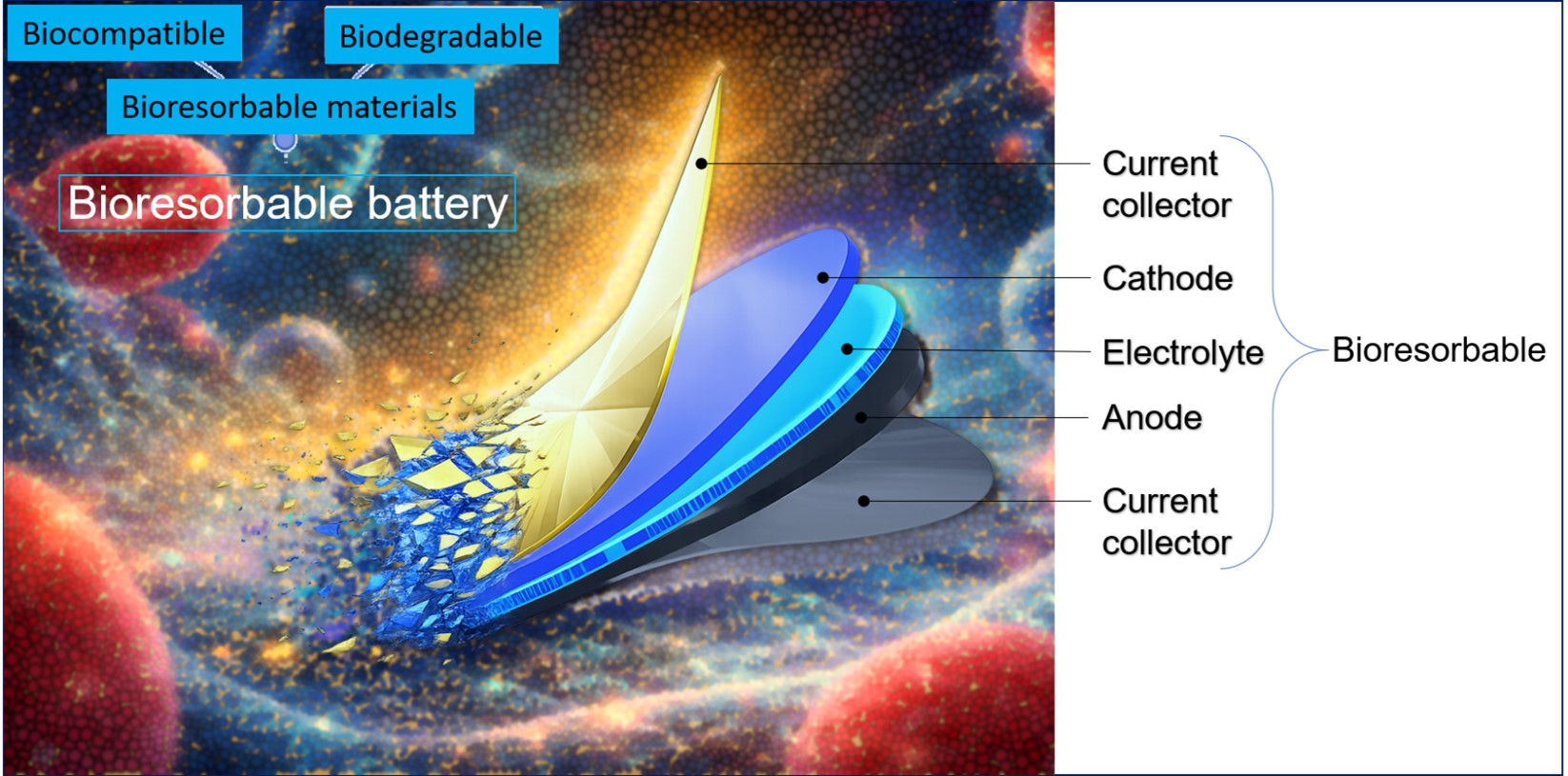
The development of bioresorbable energy sources, which eliminate the need for a second surgical intervention to remove the device, remains a major challenge in the field of “resorbtronics.” In this context, we have developed an alternative fabrication technique for fully bioresorbable sodium-ion (Na-ion) batteries. First, biocompatible materials were selected and shaped: NaTi₂(PO₄)₃-C pellets as the anode, Na₀.₄₄MnO₂ pellets as the cathode, and Na₂SO₄ mixed with sodium carboxymethyl cellulose as the gel electrolyte. Prior to assembly, thin layers of Mo or Mg, used as current collectors, were deposited on the electrodes via physical vapor deposition (PVD). We demonstrated that the choice of current collector significantly impacts the electrochemical performance of the batteries: those based on Mo achieved a discharge capacity of 6.8 mAh cm⁻² at a C/2 rate, twice that of Mg-based batteries, which are prone to severe oxidation reactions.
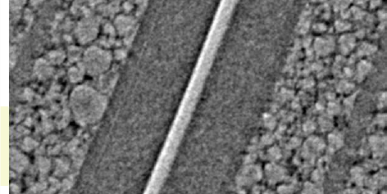
Additionally, electrodes were microstructured using laser ablation to enhance both electrochemical performance and mechanical flexibility of the full cell. Unlike 2D batteries, which suffer irreversible damage when bent, batteries with electrodes featuring 30 µm micropillars not only doubled their capacity but also retained 70% of their initial capacity at a 30° bending angle after more than 100 cycles. However, the laser micromachining process used to create these microstructures has several limitations, including long processing times (45 to 60 minutes per electrode) and the risk of thermal damage to the electrodes due to prolonged laser exposure. To address these issues, we developed a cold molding technique that enables precise formation of microstructures while drastically reducing fabrication time to just a few seconds. This approach also minimizes the risk of electrode degradation from overheating, thereby preserving material integrity. The results show that molding not only improves the efficiency of the fabrication process but also enhances the functional properties of the electrodes, making it a promising method for large-scale production of high-performance batteries.
In parallel, the biocompatibility of the batteries was evaluated and confirmed through in vitro cytotoxicity tests. Implantation studies in mice further confirmed the safe degradation of the batteries within the body, as observed through animal behavior and ex vivo organ analysis after three months. From an application standpoint, the lifespan and disintegration time of the implanted batteries can be precisely controlled by simply adjusting the thickness of a bioresorbable encapsulation layer, allowing the batteries to be tailored for specific medical applications. These new energy sources, whose natural disintegration can be controlled by the body, eliminate the need for surgical removal, making them particularly suitable for transient medical devices.
Publication V. K. A. Muniraj, B. L. Vijayan, H. Hammoud, R. Delattre, M. Ramuz, E. Djenizian, E. Vandini, D. Giuliani, T. Djenizian, Bioresorbable and Wireless Rechargeable Implanted Na-ion Battery for Temporary Medical Devices, Advanced Functional Materials, 2417353 (2025).
Autres Highlights