Power battery electrode materials
The Battle of Hernani will not take place
The HiPoHyBat project aims to develop sustainable, safe, low-cost batteries that combine both high power and energy density. Relying solely on conventional synthesis methods for electrode materials would inevitably be limiting, so from its inception, the project considered more innovative—yet riskier—strategies to achieve its goals. After three years, these research avenues have borne fruit, and far from competing, synergies are beginning to emerge with compelling results. The battle between the Classics and the Moderns will not take place!1
These synergies can be illustrated through two examples. Regarding high-power Na-ion batteries, studying the parameters controlling transport mechanisms enabled the optimization of a layered oxide composition and the stabilization of two O-type polymorphs with good energy density, while the P-type provided power.2 Initial tests combining these polymorphs (mixing, intergrowth) demonstrate a coupling effect on performance, though high-potential stability—currently under investigation using advanced operando characterization techniques—remains a challenge. The material association approach was also pursued at the negative electrode level (Hard Carbon/Na₂Ti₃O₇ blend)3, overcoming the issue of the oxide’s low electronic conductivity through the optimization of a carbon coating deposited via chemical vapor deposition (CVD). The resulting composite electrodes show a notable improvement in energy densities, particularly volumetric ones, compared to simple active material blends. The electrolyte remains a key component for battery operation, and an optimized formulation has been proposed to enhance cell cyclability.
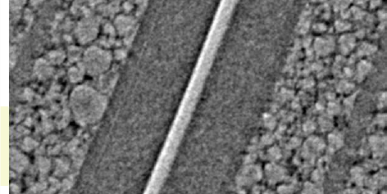
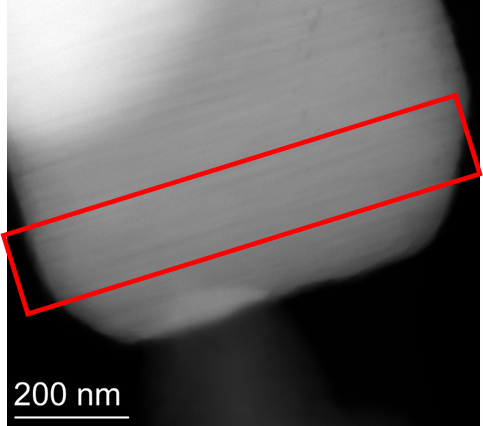
For less conventional syntheses, efforts focused on nitrogen-doped carbon preparations via templating4, surface functionalization, and the introduction of defects through chemical methods or ion implantation and irradiation in existing materials. The latter approach was successfully conducted at GANIL in Caen (Grand Accélérateur National d’Ions Lourds) on over twenty compounds (Figure 1). Changes in structural, microstructural, and electrochemical properties were studied for several electrode materials, revealing a strong dependence on the degree of irradiation. Initial successes in power modulation were achieved with thin films of vanadium nitride5. Na-ion battery electrode materials initially showed improved power performance, followed by degradation in crystallinity and electrochemical behavior at higher ion doses. Studies continue on O3- and P2-type oxides, various carbons, MXenes, and more.
Thus, the proposed strategies collectively bring us closer to the targeted performance for both high-power sodium-ion batteries and hybrid batteries.
- https://fr.wikipedia.org/wiki/Bataille_d%27Hernani ↩︎
- O3 vs P2 sodium layered oxides: Comparative study on electrode-electrolyte reactivity and structural stability for cycling performance, Juan Forero-Saboya, Yue Zhou, Stephen Browne, Ivan Moiseev, Chloe Pablos, John Abou-Rjeily, Arame Mboup, Clemence Alphen, Leiting Zhang, Biao Li, Artem Abakumov, Jean-Marie Tarascon and Sathiya Mariyappan, Energy Storage Materials 80 (2025) 104423 (DOI: 10.1016/j.ensm.2025.104423), hal-05308175v1. ↩︎
- Zoizou, Beda, Ghimbeu, Simonin, Patent n° FR2412273 ↩︎
- Engineering nitrogen-doped porous carbon positive electrodes for high-performance sodium-ion capacitors: the critical role of porosity, structure and surface functionalities, A Adeniji, A Beda, P Fioux, C Matei Ghimbeu, Journal of Materials Chemistry A, 2025,13, 14896-14914, hal-05347544v1. ↩︎
- Impact of swift heavy ions irradiation on the microstructural and electrochemical properties of vanadium nitride thin films for micro-supercapacitors, Allan Lebreton, Camille Douard, Clara Grygiel, Isabelle Monnet, Charlotte Bodin, Jonathan Coleman, Christophe Lethien, Jérémy Barbé, Thierry Brousse, Electrochimica Acta 539 (2025) 146963, hal-05229310v1. ↩︎
Autres Highlights